Stargate Movie: Interesting Facts That Are Not Widely Known
Discover fascinating and little-known facts about the Stargate movie, from production secrets to story details that make this film legendary.
The film Stargate, released in 1994, remains a classic in science fiction. Although many fans are familiar with the film’s plot and its iconic wormhole device, there are lesser-known facts about the film’s production, cast, and cultural impact that make it even more fascinating. Here, News Time & Let’s Talk Arts will provide some interesting details you might not know.
The Origins of Stargate: A Vision by Roland Emmerich
Before Stargate became a cinematic reality, the concept existed solely in the imagination of director Roland Emmerich. Emmerich, along with co-writer Dean Devlin, envisioned a story that combined archaeology, ancient civilizations, and science fiction. Interestingly, the movie’s premise was inspired by Emmerich’s fascination with Egyptian mythology and the concept of wormholes as portals to other worlds.
Emmerich wanted to create a realistic depiction of space travel without relying heavily on CGI. The film’s early concept art and storyboards show a strong focus on practical effects and authentic-looking ancient structures, which helped the movie maintain a grounded feel despite its fantastical elements.
Casting Secrets: How Kurt Russell and James Spader Shaped Their Roles
Most people recognize Kurt Russell as Colonel Jack O’Neil and James Spader as Dr. Daniel Jackson, but few know that casting was a meticulous process. The producers initially considered other actors for both roles. Kurt Russell, famous for action movies in the ’80s, was reluctant to take on the project due to its sci-fi nature. However, after reading the script, he became intrigued by the character’s emotional depth, particularly O’Neil’s humor and humanity.
James Spader’s portrayal of Daniel Jackson added layers of intellectual charm and vulnerability. Spader was drawn to the role because it allowed him to explore archaeology, linguistics, and ancient cultures, blending adventure with intellect, a combination rarely seen in mainstream sci-fi at the time.
Read Also: News, Entertainment, and Arts: It’s Time to Talk Creativity
The Stargate Device: More Than Just a Prop
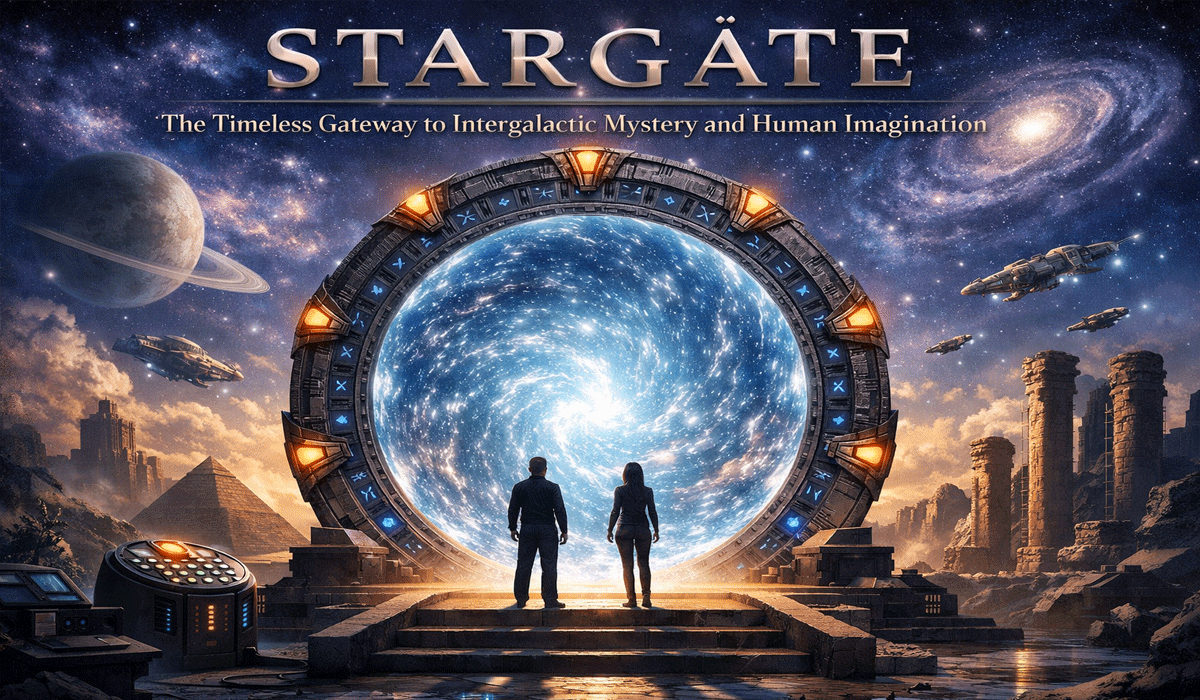
The Stargate itself is arguably the most iconic element of the movie. Constructed as a 9-foot diameter ring covered in hieroglyphs, it was not only a central plot device but also a technical marvel in production design. The filmmakers collaborated with engineers to make the gate appear functional, with moving parts and glowing symbols that added authenticity.
What’s fascinating is that the visual representation of the wormhole was achieved using practical effects combined with early CGI. This technique was cutting-edge for the early ’90s and influenced how other sci-fi films depicted teleportation and space travel.
Hidden Connections to Ancient Civilizations
While Stargate is a work of fiction, it incorporates numerous real-world historical and mythological references. For example, the character of Ra, the alien posing as an Egyptian god, draws inspiration from ancient Egyptian sun worship. The hieroglyphs on the Stargate are actual Egyptian symbols, though creatively arranged to fit the film’s narrative.
Additionally, the movie subtly references Sumerian and Mesopotamian civilizations. The design of the alien technology, architecture, and even costumes reflects Emmerich’s extensive research into ancient cultures. This blend of fact and fiction gives the movie a unique sense of realism that appeals to history buffs and sci-fi enthusiasts alike.
Cultural Impact and Legacy Beyond the Film
Although the Stargate movie received mixed reviews upon release, its influence has grown significantly over time. One of the most notable impacts is the creation of the Stargate franchise, including multiple television series like Stargate SG-1, Stargate Atlantis, and Stargate Universe. These series expanded the movie’s universe, exploring new worlds, civilizations, and advanced alien technologies.
Interestingly, the film also inspired fan communities that analyze the movie’s historical references, alien mythology, and scientific plausibility. Many fans continue to debate whether the Stargate’s concept of instantaneous travel could ever become reality. Moreover, the movie’s portrayal of interstellar diplomacy and exploration has influenced other sci-fi productions, from TV shows to video games.
Conclusion
The Stargate movie is much more than a 1994 sci-fi adventure, it’s a fusion of history, mythology, and groundbreaking filmmaking. From Roland Emmerich’s visionary storytelling to the intricate details of the Stargate device, there are countless fascinating aspects that many fans overlook. Its cultural legacy, detailed casting choices, and connection to ancient civilizations make it a film worthy of deeper exploration. For anyone interested in science fiction or history, Stargate offers a rich, layered experience that continues to captivate audiences decades later.
Image Information Source:
- First Image from collider.com
- Second Image from gamerant.com