The Timeless Gateway to Intergalactic Mystery and Human Imagination
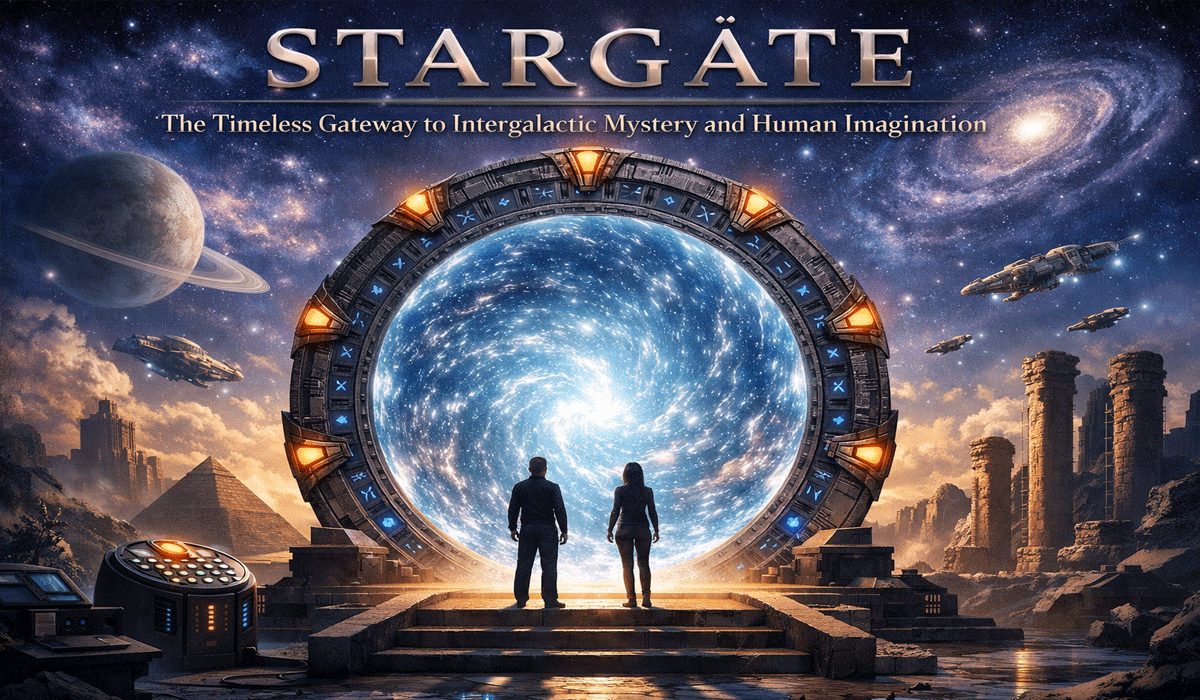
Science fiction cinema has always pushed the boundaries of imagination, but only a few works manage to remain meaningful across generations.
One of those rare creations is the film Stargate, a story that blends ancient mystery, futuristic technology, and the endless human curiosity about what lies beyond Earth. Its concept of interstellar travel through a mysterious portal has made it a lasting icon in sci-fi storytelling.
Below News Time, we will explore the timeless universe of Stargate, uncovering how ancient mystery, science fiction, and intergalactic imagination come together to transform storytelling into an immersive journey that expands the mind and sparks curiosity beyond the stars.
The Ancient Portal That Opened a New Universe
The story of Stargate began in 1994, directed by Roland Emmerich, who brought a unique vision to science fiction cinema. The film introduces a massive circular device discovered in Egypt, believed to be an ancient artifact but later revealed as a gateway to another world. This structure, known as the Stargate, uses a system of symbols that function like coordinates to activate interstellar travel.
What makes this concept fascinating is how it blends archaeology with advanced science fiction ideas. Instead of imagining spaceships traveling across galaxies in the traditional way, the film presents a shortcut through space-time. This idea is loosely inspired by theoretical physics concepts such as wormholes, which suggest the possibility of shortcuts between distant points in the universe.
A Journey of Language, Science, and Survival
The plot intensifies when an archaeologist and linguist, Dr. Daniel Jackson, decodes the symbols needed to activate the Stargate. His discovery leads him to join a military mission led by Colonel Jack O’Neil. Together, they step through the portal and arrive on a distant planet that mirrors ancient Egyptian civilization.
At first, the team is amazed by the similarities between the alien world and Earth’s ancient history. However, they soon realize that the local population is under control of a powerful alien ruler. This being disguises itself as a god and uses fear and technology to dominate the people. The mission quickly turns into a struggle for survival and liberation.
Read Also: Secrets Of Captivating Commercial Photography That Sells
Egyptian Mythology Reimagined Through Science Fiction
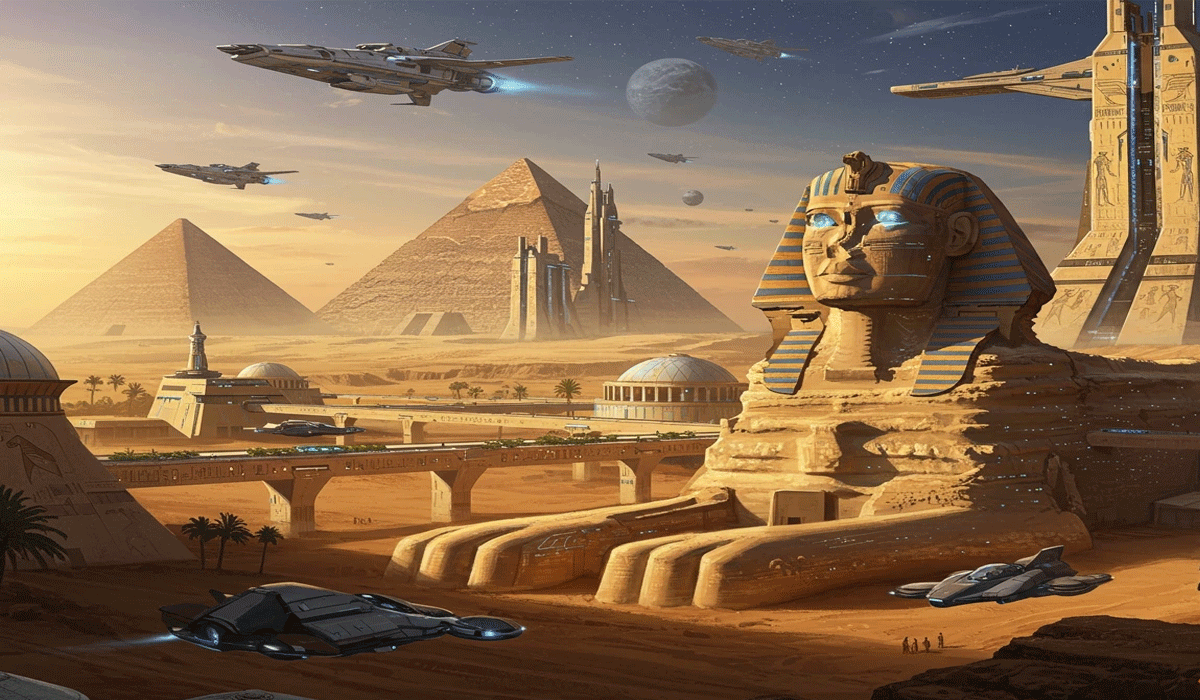
One of the most distinctive elements of Stargate is its creative use of Egyptian mythology. Instead of treating gods like Ra as supernatural beings, the film reimagines them as advanced extraterrestrial entities. This perspective challenges traditional interpretations of mythology and encourages viewers to think differently about ancient stories.
The visual design of the film strongly supports this concept. From pyramids and desert landscapes to hieroglyph-inspired technology, every detail is carefully crafted to reflect a fusion of ancient culture and alien influence. This combination creates a world that feels both familiar and completely foreign at the same time.
Expanding the Universe Stargate Beyond Film
The success of the original movie led to a long-running franchise, including popular series such as Stargate SG-1 and Stargate Atlantis. These shows expanded the universe by introducing new planets, alien species, and deeper political conflicts across galaxies.
Each installment built upon the original idea of Stargate travel, allowing storytelling to evolve into a vast interconnected universe. Characters developed over time, facing moral dilemmas, scientific challenges, and intergalactic diplomacy. This expansion helped the franchise grow beyond a single film into a rich science fiction world.
Why Stargate Remains a Timeless Sci-Fi Classic
The lasting appeal of Stargate comes from its ability to combine imagination with relatable human questions. It is not just about traveling through space, but about understanding identity, history, and possibility. The idea that ancient mysteries could connect to futuristic science keeps audiences intrigued even today.
Another reason for its timelessness is its universal theme of exploration. Humanity’s desire to discover what lies beyond the known world is deeply embedded in our nature. Stargate captures this curiosity in a way that feels both exciting and meaningful.
First Image from 938newstime.info
Second Image from www.craiyon.com