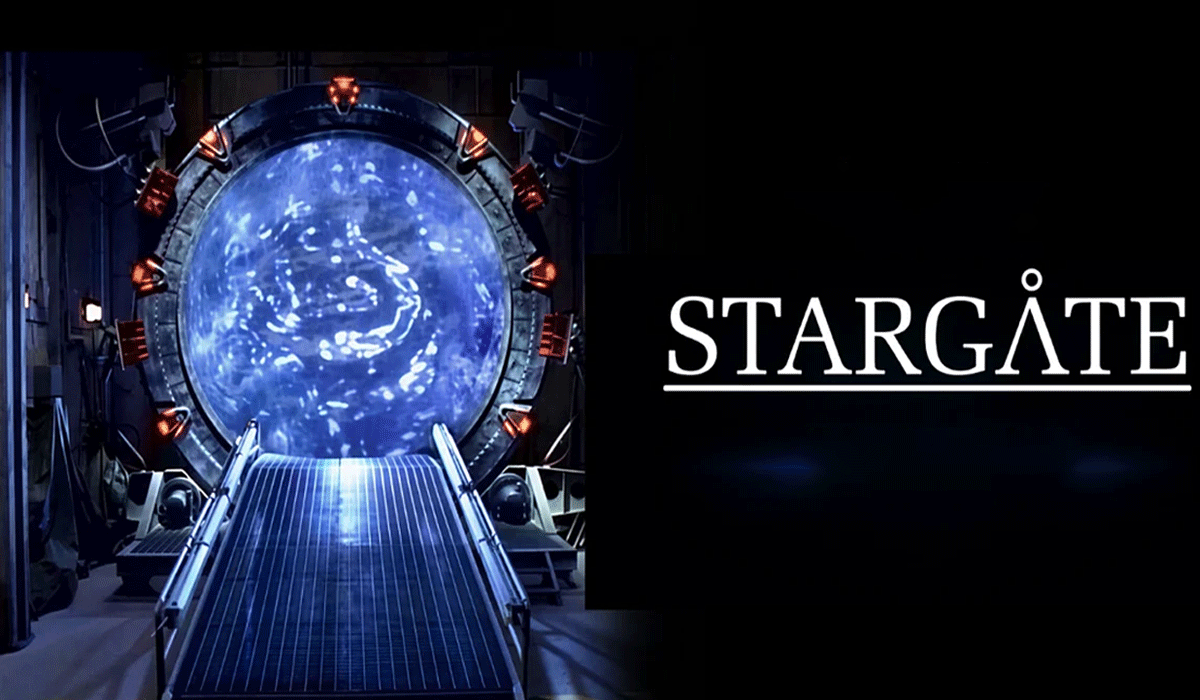
Exploring the Origins and Concept of Stargate
The Stargate movie, released in 1994, has become a landmark in science fiction cinema.
Directed by Roland Emmerich, it introduced audiences to the concept of ancient alien technology and interstellar travel. The film’s premise revolves around a mysterious device known as the Stargate, which serves as a portal connecting Earth to distant worlds. This innovative concept captured the imagination of viewers, leading to a lasting franchise that includes television series, spin-offs, and novels. Understanding the origins and central ideas of Stargate provides insight into why it remains influential in the sci-fi genre News Time.
Origins of the Stargate Concept
The idea of Stargate emerged from Roland Emmerich’s fascination with ancient civilizations and unexplained phenomena. He collaborated with screenwriter Dean Devlin to create a story blending science fiction with mythology. The Stargate itself draws inspiration from historical artifacts, suggesting a link between human history and extraterrestrial influence.
The film’s premise reflects common sci-fi themes, such as space exploration, advanced technology, and the unknown. By grounding these ideas in recognizable Earth history, the story becomes more relatable while still imaginative. The concept resonates with audiences curious about ancient mysteries and alien life.
Additionally, the notion of a portal for instant travel challenged traditional science fiction tropes. Unlike conventional space travel, the Stargate allows characters to explore distant planets rapidly, opening the door for unique storytelling opportunities and imaginative world-building.
The Central Plot and Themes
The story follows Dr. Daniel Jackson, an archaeologist who deciphers the Stargate’s symbols. He joins a military expedition led by Colonel Jack O’Neil to explore the other side of the portal. Their mission uncovers an alien civilization ruled by the godlike Ra, who manipulates humans to serve his agenda.
Themes of discovery, adventure, and the clash between ancient knowledge and modern science dominate the narrative. The movie explores the idea that human civilization may have been influenced by extraterrestrial beings, a theme that blends historical speculation with science fiction.
The film also addresses moral questions, such as freedom versus control, and the responsibility that comes with advanced technology. Characters face challenges that test their intellect, courage, and adaptability, creating a balance between action and thought-provoking storytelling.
Also Read: From Movies To Games: The Evolution Of Modern Entertainment
Visual and Cinematic Innovation
Stargate stood out for its groundbreaking visual effects at the time. The depiction of the Stargate’s wormhole and otherworldly landscapes created a believable and immersive experience for viewers. These visuals played a crucial role in conveying the science fiction elements convincingly.
The production team combined practical effects with computer-generated imagery to achieve a realistic portrayal of alien worlds. Attention to detail in set design, costumes, and hieroglyphic symbols helped create a sense of authenticity, reinforcing the connection between the ancient Earth and advanced extraterrestrial technology.
Cinematography and sound design also contributed to the film’s atmosphere. The visual transitions through the Stargate portal and the orchestral score enhanced suspense and wonder, making Stargate memorable beyond its storyline.
Legacy and Influence
Following its release, Stargate inspired a major franchise, including the long-running TV series Stargate SG-1, spin-offs, and novels. The movie’s concept proved versatile enough to support complex narratives across different media.
Its influence extends beyond entertainment, sparking discussions about mythology, archaeology, and the possibility of advanced ancient civilizations. The blending of science fiction with historical references encouraged audiences to explore creative interpretations of history and science.
Moreover, Stargate contributed to the popularity of “portal-based” science fiction, inspiring other films and shows that explore instant interstellar travel as a central concept. Its success highlighted the potential of combining imaginative concepts with engaging characters.
Themes of Human Curiosity and Exploration
At its core, Stargate celebrates human curiosity and the drive to explore the unknown. Dr. Daniel Jackson embodies intellectual curiosity and the pursuit of knowledge, while Colonel O’Neil represents courage and resilience. Their collaboration emphasizes the importance of combining intellect and action.
The Stargate itself symbolizes the unknown possibilities of the universe. By stepping through the portal, humans confront new challenges, learn from alien civilizations, and expand their understanding of existence beyond Earth.
This theme resonates with audiences because it reflects the innate human desire to explore, innovate, and understand our place in the cosmos. The movie suggests that curiosity, coupled with responsibility, can lead to growth and discovery.
Conclusion
The Stargate movie remains a landmark in science fiction for its innovative concept, engaging story, and visual achievements. Its blending of mythology, history, and advanced technology created a unique cinematic experience.
By exploring human curiosity, moral questions, and the potential of ancient civilizations, Stargate has left a lasting legacy. Its influence continues in TV series, novels, and modern sci-fi storytelling, making it a classic for generations of fans.
Image Source From
First Photo From: primevideo.com
Second Photo of: kvibe.com