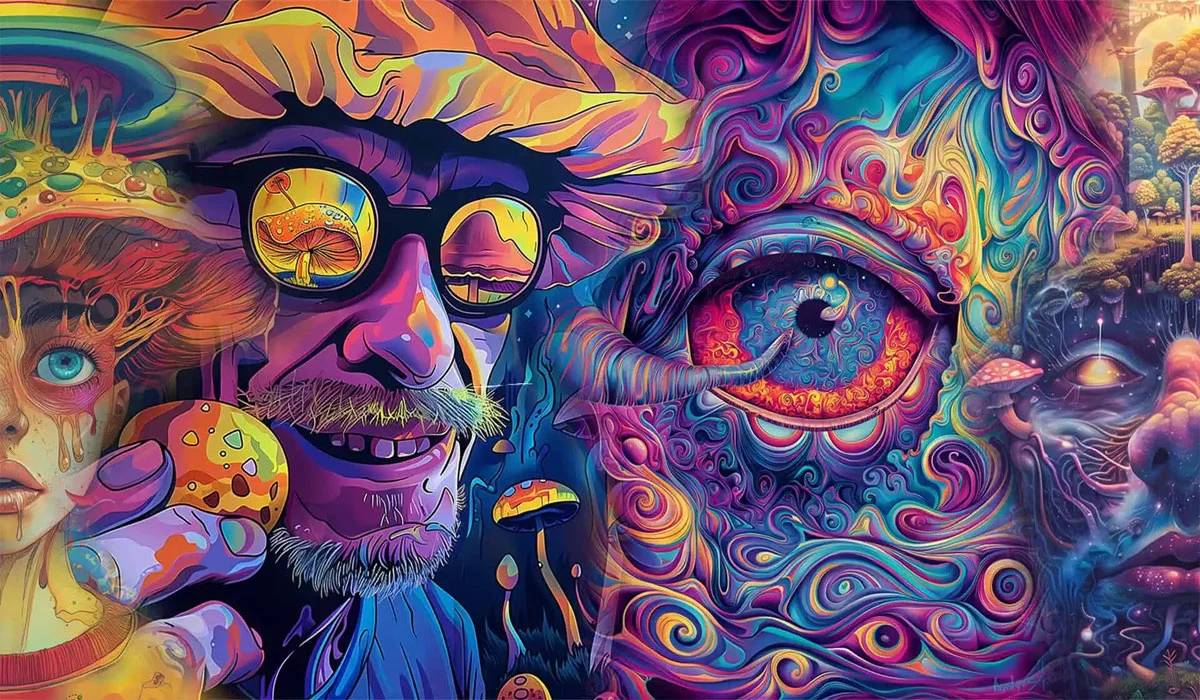
The Evocative Beauty of Visual Illusions in Psychedelic Art

Psychedelic art possesses the beauty of visual illusions that can stir the feelings and thoughts of its viewers.
The term psychedelic itself comes from the Greek, where psycho means mind, soul, or mental, and delein means to manifest or bring into being. Therefore, psychedelic can be interpreted as a manifestation of the soul or the realization of a vision of the mind. Here are News Time and Let’s Talk Arts, creative spaces that present news, art, and inspiration, opening new perspectives, enlivening creativity, and providing meaningful experiences every day.
Exploring Imagination through Form and Color
Psychedelic art is always synonymous with colorful, richly detailed visuals, and brimming with hidden meanings. These elements create a visual experience that not only pleases the eye but also stimulates the imagination. In psychedelic artwork, abstract shapes move as if alive, neon colors blend harmoniously yet feel wild, and intricate patterns create the sensation of being in a different world.
This beauty comes not only from the visual beauty, but also from the ability of each element to transport the viewer into a new perceptual space. Psychedelic artists intentionally create compositions that stimulate curiosity and open the door to broad interpretations. The experience of viewing a psychedelic work often feels like a journey into another dimension.
The Hidden Meaning Behind Visual Illusions
Behind the busy and strange visual displays, psychedelic art harbors layers of profound meaning. Spiritual experiences, and the search for identity. The visual illusions in psychedelic art are not merely a play on the eyes, but rather symbolism that often reveals philosophical messages about life, consciousness, and humanity’s relationship with the universe.
Repeating patterns depict the cycles of nature, intricate geometric shapes illustrate harmony in chaos, while the blend of colors reflects layered emotions. Some artists also convey psychological phenomena such as dreams, hallucinations, or introspective journeys. What appears random in psychedelic paintings is actually a representation of an inner world that is difficult to express verbally.
The Influence of Technology in Driving the Evolution of Psychedelic Art

Technological advancements have taken psychedelic art to a more astonishing level. While psychedelic works once existed only in the form of hand-drawn drawings. Now digital technology allows artists to create far more dynamic, immersive, and interactive visuals.
Graphic design software, 3D animation, and artificial intelligence are opening up new avenues for aesthetic exploration. Modern psychedelic visuals can move, change, and react to touch or sound, creating an unprecedented multisensory experience.
Furthermore, psychedelic art now exists in various mediums such as music videos, digital installations, projection mapping, and virtual reality experiences. This technology allows the viewer to feel as if they are truly immersed in the illusionary world being created. Colors appear more vivid, movements more fluid, and visual depth is even more captivating.
The Beauty of Illusion as a Link between Art and Consciousness
Psychedelic art offers a visual experience that is not merely observed, but felt. The evocative beauty of visual illusions bridges the gap between art and human consciousness. Through these works, viewers can reflect, gain deeper self-understanding, and experience moments of reflection rarely encountered in everyday life. Psychedelic art makes visuals a universal language that transcends words, culture, and logic.
Amidst the fast-paced modern world, psychedelic art provides a space for people to pause and experience a more personal visual journey. The illusions presented enrich the aesthetic experience and reveal the understanding that art is not just about visual beauty, but also about how the work affects the mind and emotions. Thank you for joining News Time and Let’s Talk Arts. Stay tuned for daily inspiration, information, and creative-fueled art.
Image Information Source:
First Image from: substack.com
Second Image from: abirpothi.com