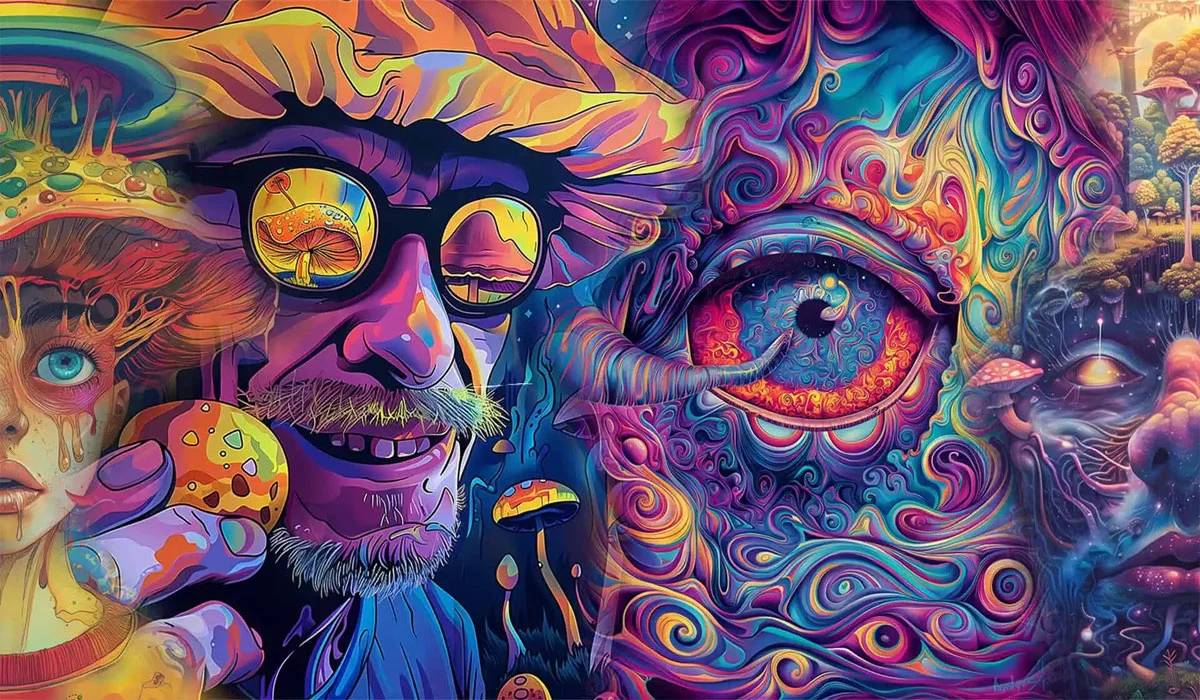
Colors of the Mind: The Evolution of Psychedelic Art
Describes the journey of psychedelic art, showing how vibrant colors, shifting perceptions, and cultural influences shaped its creative evolution over time.
Psychedelic art is more than a visual style it is a journey into perception, emotion, and imagination, reflecting how color and creativity can reshape the way we experience reality.
Below, News Time & Lets Talk Arts will provide some explanations regarding colors of the mind: the evolution of psychedelic art.
The Origins of Psychedelic Expression
Psychedelic art emerged prominently in the 1960s, closely connected to the counterculture movement and the exploration of expanded consciousness. Influenced by the use of psychedelic substances and spiritual experimentation, artists began to challenge traditional forms, replacing realism with vibrant abstraction. The movement was deeply tied to music, particularly rock and roll, where album covers and concert posters became powerful canvases for experimentation.
Early psychedelic works were characterized by intense color contrasts, swirling patterns, and distorted typography. Artists sought to visually represent altered states of mind, translating sensory experiences into dynamic compositions. This period marked the beginning of art as an immersive experience rather than a static image.
The Power of Color and Perception
Color is the foundation of psychedelic art. Bold neon hues, unexpected combinations, and glowing gradients are used not just for decoration but for psychological impact. These colors stimulate emotion, movement, and even a sense of visual vibration, creating artworks that feel alive.
Beyond aesthetics, psychedelic color theory explores how the human brain interprets light and contrast. Artists intentionally manipulate saturation and repetition to produce optical illusions, encouraging viewers to question what they see. In this way, color becomes a tool for expanding awareness rather than simply conveying beauty.
Also Read: Psychedelic Art Techniques for Beginners
From Analog to Digital Revolution
As technology advanced, psychedelic art evolved beyond traditional paint and ink. Digital tools introduced new possibilities for precision, layering, and animation. Artists could now create complex fractals, symmetrical designs, and interactive visuals that were once impossible to achieve by hand.
The digital era transformed psychedelic art into a global phenomenon. Social media platforms and design software allowed artists to share their work instantly, influencing fashion, branding, music videos, and virtual environments. Psychedelic aesthetics became integrated into mainstream culture while still preserving their experimental spirit.
Modern Interpretations and Cultural Influence
Today, psychedelic art continues to evolve, blending vintage inspiration with contemporary themes. Modern artists incorporate elements of surrealism, abstract expressionism, and even artificial intelligence to produce innovative works. The style is no longer confined to a single movement but exists as a flexible and ever-changing visual language.
Psychedelic influences can be seen in digital art, immersive installations, and multimedia experiences. Festivals, virtual reality environments, and creative industries use psychedelic design to create captivating atmospheres. This evolution demonstrates how the movement has transcended its origins to become a lasting artistic force.
Conclusion
The evolution of psychedelic art reflects humanity’s endless curiosity about perception and consciousness. From its countercultural beginnings to its digital transformation, it has continuously adapted while maintaining its core identity bold color, imaginative forms, and a desire to explore the unknown. “Colors of the Mind” reminds us that art is not only something we observe, but something we experience. Through its vibrant expressions, psychedelic art continues to challenge boundaries, inspire creativity, and invite viewers into a world where imagination knows no limits.
Image Source:
First Image from: artsology.com
Second Image from: psychologytoday.com