Giant Anaconda Lurks in the Darkness of the Amazon Rainforest

The giant anaconda is one of the largest snakes in the world, known for its ability to adapt to the waters of the Amazon Rainforest.
This snake is a skilled swimmer and can hold its breath underwater for up to 10 minutes. There are four species of anaconda, including the green anaconda (Eunectes murinus), the yellow anaconda (E. notaeus), the Bolivian anaconda (E. beniensis), and the black-spotted anaconda (E. deschauenseei). see below we will discuss about News Time & Lets Talk Arts.
New Giant Anaconda Species Discovered
Recently, a new giant anaconda species, named the northern green anaconda (Eunectes akayima), was discovered in the Ecuadorian Amazon rainforest, South America. This discovery is the result of 20 years of research that collected blood and tissue samples from green anacondas throughout South America.
This new species is genetically distinct from the green anaconda (E. murinus), its closest relative, with a genetic difference of 5.5 percent, greater than the approximately 2 percent difference between humans and chimpanzees. One female anaconda found in Waorani territory measured 6.3 meters from head to tail, although local people have reported larger individuals.
The research team, led by Professor Bryan Fry of the University of Queensland, collaborated with the Waorani indigenous people, who consider the snake sacred and assisted in the search expedition. Actor Will Smith also joined the team while filming a series for National Geographic.
Read Also: Emotion in Motion The Power of Illusory Images in Modern Art
Anaconda Characteristics and Behavior
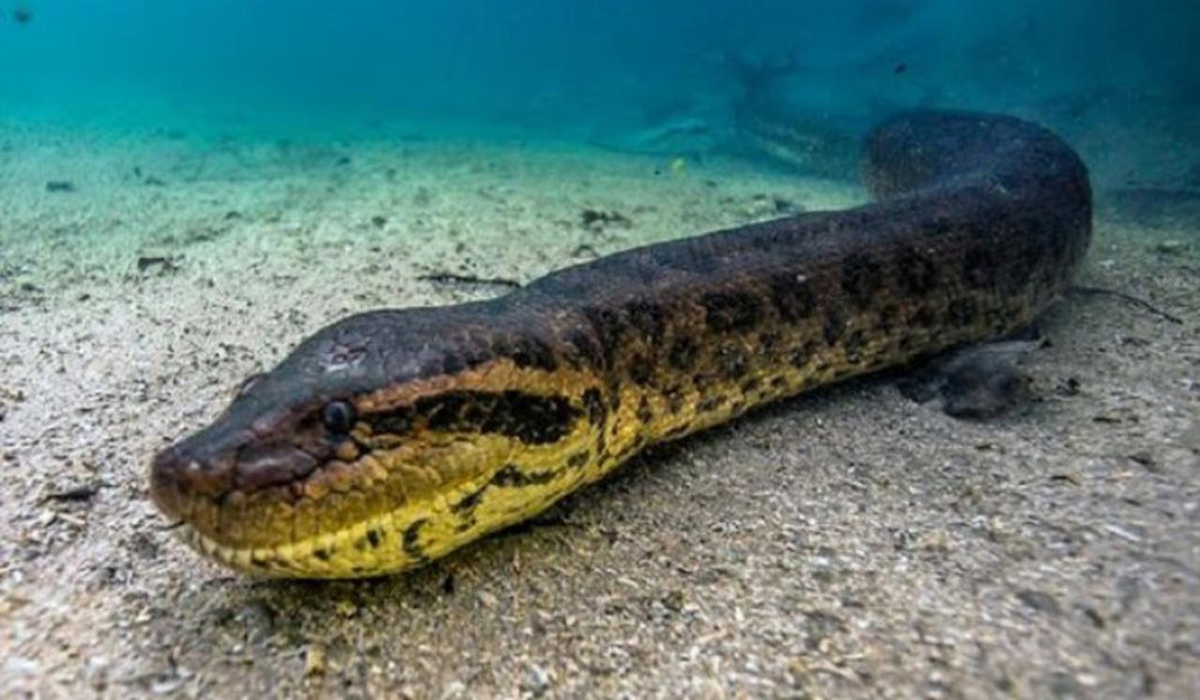
Anacondas are non-venomous snakes that rely on their constricting power to subdue prey. They capture prey in their jaws and then constrict until the animal is suffocated or crushed. The anaconda’s diet is diverse, ranging from fish and birds to mammals and other reptiles.
Green anacondas even prey on large animals such as peccaries, tapirs, deer, and capybaras, which can weigh up to 140 kilograms. The anaconda’s lower jaw is not fused to its skull, allowing it to open its jaws very wide to swallow larger prey. After feeding, an anaconda can survive without food for months.
Anacondas are largely semi-aquatic and breed in slow-moving waters, such as swamps and rivers in the Amazon and Orinoco basins. They are slow on land but very fast in water. Anacondas’ eyes and nostrils are located higher on their heads than most snakes, allowing them to stalk prey while almost completely submerged.
Anacondas are solitary animals and only congregate during the mating season, which typically occurs between April and May. During this period, up to 12 males may attempt to mate with a single female in a formation known as a “breeding ball” that can last more than four weeks. Female green anacondas can give birth to 60-100 uncared young that grow to enormous proportions within a few years.
Ecological Role and Threats
As apex predators, anacondas play a crucial role in the Amazon ecosystem by regulating populations of prey such as fish, rodents, deer, and caimans. The presence of anacondas helps maintain the biodiversity of plants and animals in the complex food chain of rainforests.
However, anacondas face numerous serious threats throughout their range, including habitat loss due to deforestation, poaching, and oil spill pollution. The northern green anaconda’s relatively small population and limited distribution make this newly discovered species highly vulnerable to extinction.
Oil exploration, road construction, and climate change in Waorani territory also pose significant threats. Heavy metals and chemical waste can disrupt the reproductive systems of anacondas and other animals. New studies also show a shift in public perception of anacondas from mythical creatures to economic threats due to their predation on livestock.
Conservation and Myths
Conservation efforts are crucial for the anaconda’s survival and involve indigenous communities, such as the Waorani, who have long protected their territories. Documenting and respecting cultural traditions and indigenous knowledge is crucial to finding sustainable solutions.
Many myths circulate about anacondas, including claims that they eat humans, but these have never been verified. Anacondas tend to be shy and prefer to avoid human contact. Stories of giant anacondas swallowing humans whole are largely myths that exaggerate their eating habits and abilities.
Image Information Source:
First Image from: detik.com
Second Image from: liputan6.com

